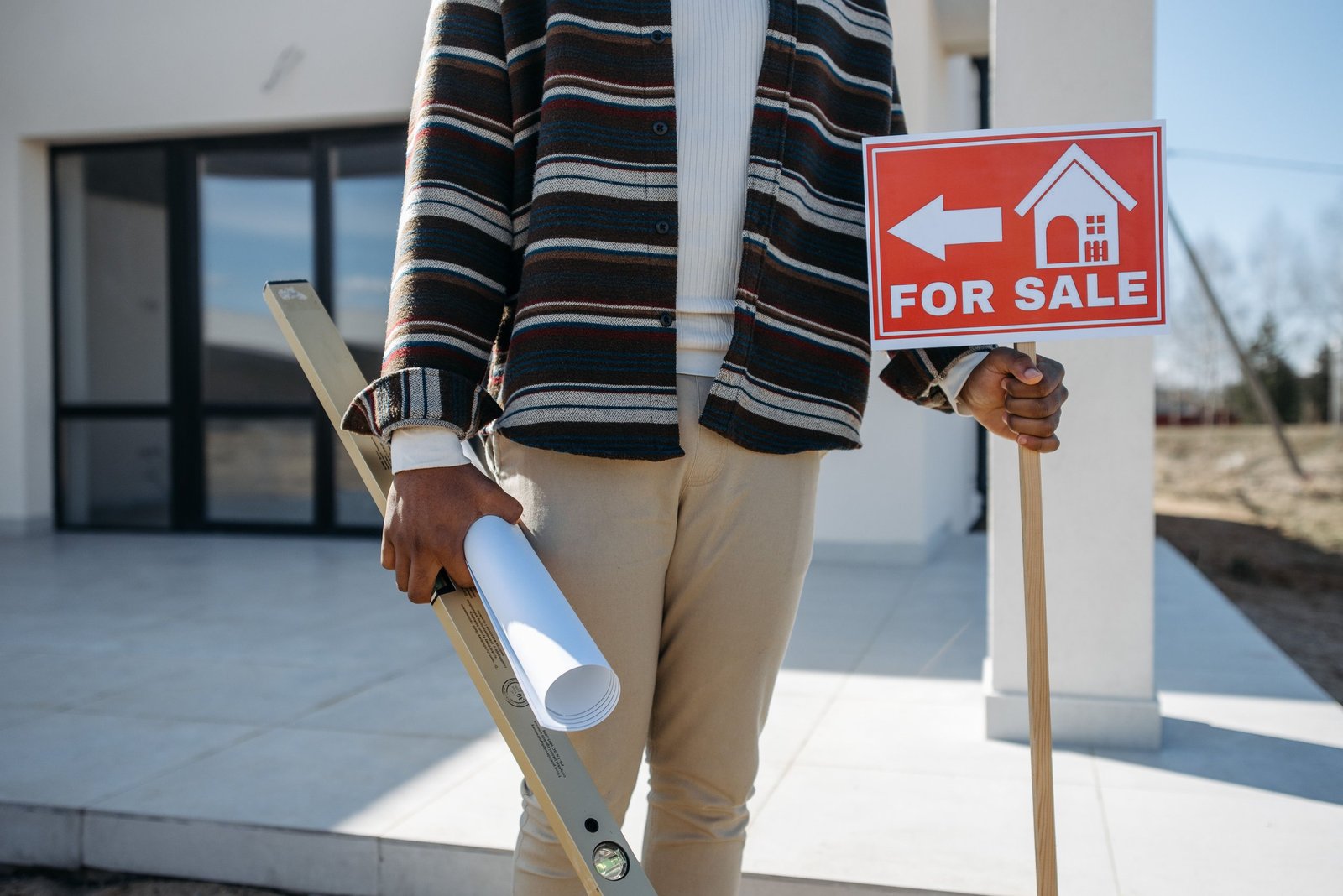
Buying property in Ghana while living abroad is entirely achievable — thousands of diaspora Ghanaians do it every year — but distance changes the risks you’re managing. You can’t casually drive past a site, sit in on a meeting, or “just pop into” the Lands Commission. Every step has to be deliberate, verified, and documented, because you’re relying on people you may never meet in person to represent your interests correctly.
This guide walks through the areas that matter most when you’re buying from outside Ghana — not as a substitute for professional advice, but so you know what to ask about and who should be answering.
Start with citizenship status, not assumptions
Ghana’s land law treats citizens and non-citizens differently, and this single distinction shapes everything else about your purchase. Under Article 266 of the 1992 Constitution, a person who is not a citizen of Ghana cannot hold a freehold interest in land, and any leasehold interest granted to a non-citizen cannot exceed 50 years at a time. Citizens are not subject to that cap.
Where this gets genuinely relevant for diaspora buyers: the constitutional text turns on citizenship, not residency. A Ghanaian citizen living abroad is still a citizen. If you hold Ghanaian citizenship (including dual citizenship), you should not assume you’ll automatically be treated as a non-citizen — but you also shouldn’t assume the opposite without checking. Citizenship documentation, how it’s recorded, and how a particular transaction is structured can all affect how straightforward this is in practice. This is exactly the kind of question to put to a Ghanaian lawyer early, before you get attached to a specific property or payment plan built around the wrong assumption.
Get a lawyer who works for you — not one who was “recommended” by the seller
This matters more for remote buyers than for anyone else. If the only person verifying the property, the title, and the paperwork is someone introduced to you by the seller, developer, or agent, you have no independent check on the transaction at all. Engage your own lawyer, directly, with a clear instruction that they report to you and only you.
A lawyer acting for you remotely can conduct due diligence, review or draft agreements, liaise with the Lands Commission, and generally stand in for the parts of the process you can’t do yourself from abroad — which brings us to power of attorney.
Power of attorney: a real tool, and a commonly abused one
A power of attorney (POA) is a legal document, governed in Ghana by the Powers of Attorney Act, 1998, that lets you authorise someone else — typically your lawyer — to act on your behalf for specific purposes, such as signing documents or progressing registration while you’re not physically present. It’s a normal, legitimate part of how diaspora buyers transact.
Two things are worth understanding clearly. First, a POA on its own does not transfer ownership of anything to the person holding it — it only authorises them to act; actually vesting title in you still happens through the proper conveyance and registration process. Second, POAs are also one of the more commonly forged or misused documents in Ghana’s land market, precisely because a document with a signature on it can look convincing from a distance. Have any POA drafted or reviewed by your own independent lawyer, never accept one pre-prepared by the other side, and confirm independently that anyone claiming to act under a POA is actually authorised to do so before relying on anything they tell you.
Send money through regulated channels
The Bank of Ghana regulates how money enters the country from abroad. Inward remittances are expected to flow through a BoG-registered money transfer operator working with a licensed Ghanaian bank or payment service provider, settle in Ghana cedis through a proper bank account, and comply with anti-money-laundering checks. Informal transfer arrangements — sending funds through an unlicensed intermediary, or into someone’s personal account “to hold” — create both a regulatory problem and a practical one: it becomes much harder to prove where your money went if something goes wrong.
Use a licensed bank or transfer operator, keep every record of what you sent, when, and why, and be wary of anyone — local contact, agent, or “helpful relative” — who asks you to send purchase funds anywhere other than a verified, named account tied to the actual transaction.
Keep your own complete set of records
When you’re not physically present, it’s easy to end up with only a partial picture — a summary from one local contact, a photo of a document rather than the document itself. Ask for, and keep, your own complete copies of everything: the agreement, correspondence, proof of every payment and who it was sent to, and any documents your lawyer reviews or registers on your behalf. If a question or dispute ever comes up, having your own complete record matters far more than being able to say someone local “handled it.”
Don’t let distance lower your due diligence
It’s tempting to rely on photos, video calls, and one trusted local contact when you can’t visit yourself — but the due diligence a property purchase requires doesn’t get lighter just because you’re further away. If anything, it deserves more structure, not less, precisely because you have fewer ways to catch a problem informally. See our Diaspora Property Guide and our separate article on property due diligence for what independent verification should actually cover — title search, site plan, encumbrances, and confirming who you’re really dealing with.
Questions worth asking before you commit
- Am I a Ghanaian citizen for the purposes of Article 266, and does that change how this specific transaction should be structured? (Ask your lawyer, don’t assume.)
- Who is my lawyer actually working for — do they report only to me, or were they introduced by the seller or developer?
- If I’m using a power of attorney, who drafted it, and has my own independent lawyer reviewed it?
- Am I sending funds through a licensed bank or registered transfer operator, into a verified, named account?
- Has anyone actually conducted an independent title search and site verification, or am I relying entirely on what I’ve been told?
- Do I have my own copies of every document — not just a summary from one local contact?
A sensible next step
Before you send any money or sign anything, get your own independent Ghanaian lawyer engaged — not one suggested by the other side of the transaction. Everything else in this guide becomes much easier to get right once you have someone whose only job is protecting your interests.
The Ghana Property Buyer Assessment, designed to help you clarify your own needs and priorities before you start looking, is now available: take the Ghana Property Buyer Assessment. The assessment opens on assessment.locatehomesghana.com, and is also linked from our Work With Me page.
This article is general educational information, not legal, financial, tax, or investment advice. See our Editorial Disclaimer for more detail, and consult an appropriately qualified Ghanaian lawyer and licensed financial institution before acting on anything above.

Leave a comment